One Night at Jawai — A Safari Experience You Will Never Forget
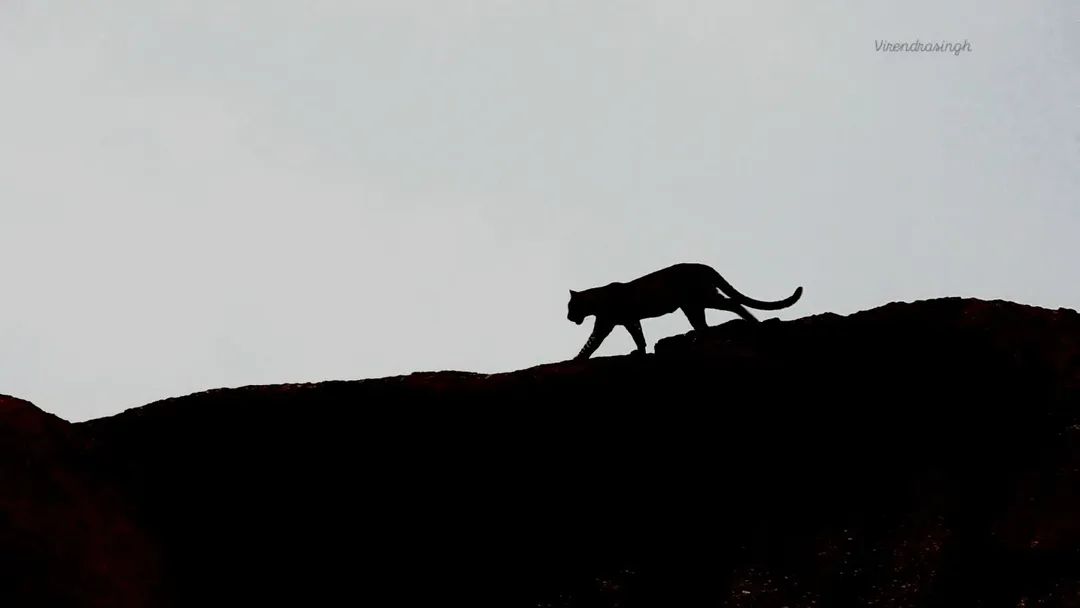
The leopard appeared at 6:47 in the evening.
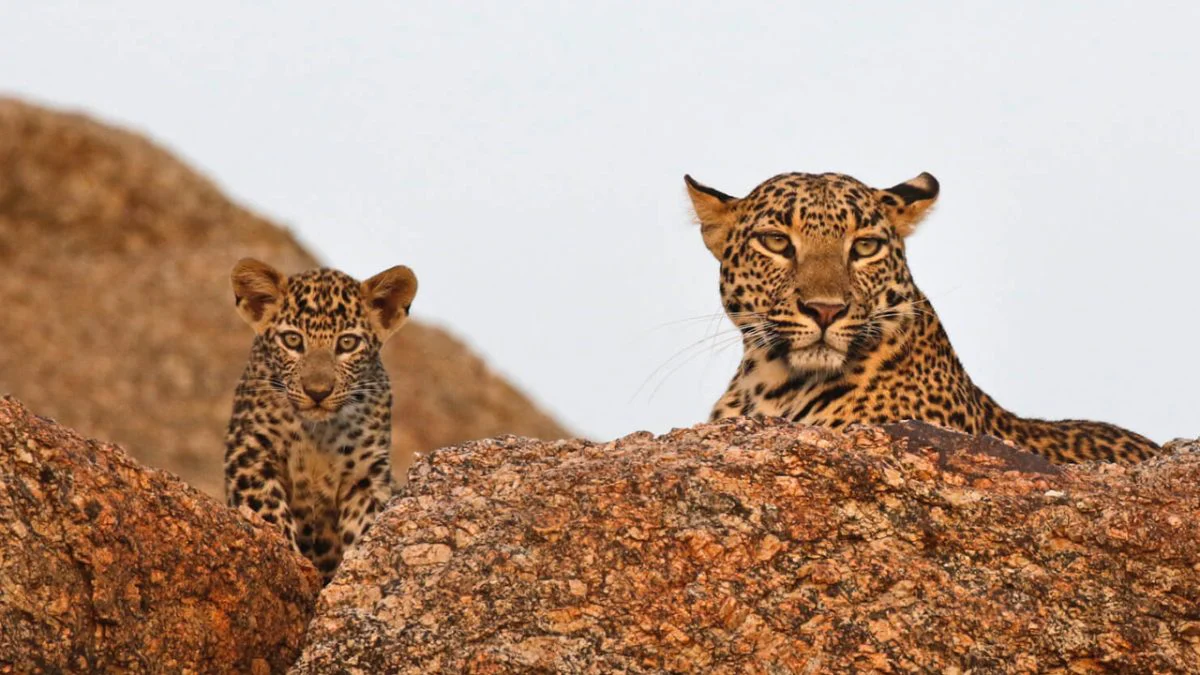
No warning. No dramatic music. No announcement from the guide. One moment the granite hillside was empty — ancient rock the colour of old bone, scattered thorn scrub, a single dry acacia casting a thin shadow in the last horizontal light of the Rajasthan day. And then, between one breath and the next, there was a leopard.
She was lying full length along a rock ledge perhaps forty metres above the valley floor, her spotted coat so perfectly matched to the texture and colour of the granite that she was invisible until she moved — one slow, deliberate turn of her magnificent head toward our jeep, golden eyes catching the last of the evening sun, holding our gaze for three long seconds with the absolute indifference of a creature that has never in its life needed to fear anything that walks on two legs.
Then she looked away. And we remembered to breathe.
This is Jawai. And nothing prepares you for it.
Arriving at the Edge of Something Wild
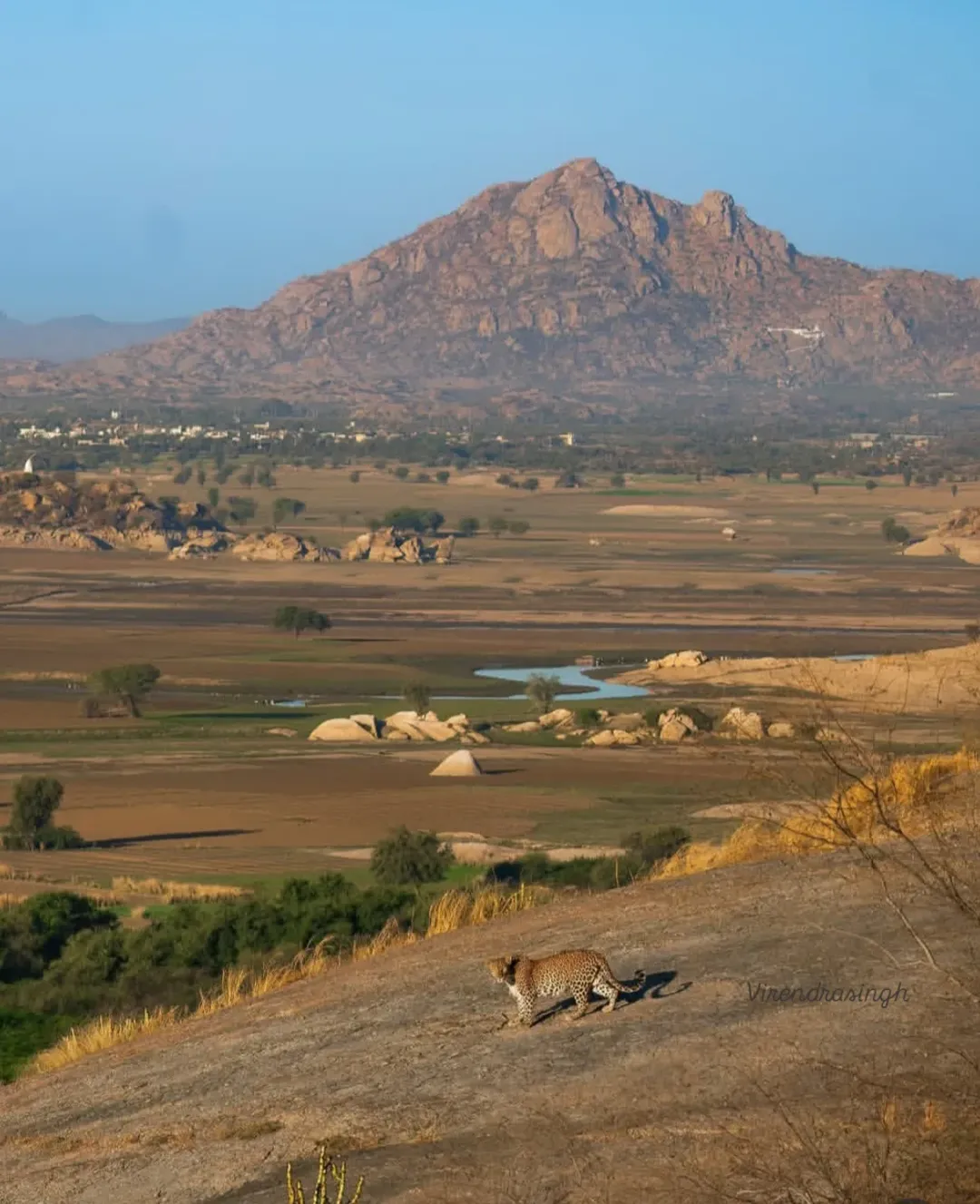
We had arrived that afternoon through a landscape that announced its wildness gradually — the flat Rajasthan plains giving way to rocky hillocks, the roadside vegetation thickening and becoming more tangled, the villages smaller and quieter, the granite outcrops larger and more dramatic with every kilometre south of Jodhpur.
By the time the car turned off the main road toward Bera village, the Aravalli granite had taken over the horizon entirely — great rounded masses of ancient rock tumbling across the landscape like the abandoned toys of some enormous geological child. And between the rocks, in the scrub and shadow, anything could be watching.
The camp was beautiful in the way that the best wilderness camps always are — not imposing on the landscape but growing from it, the tents placed where the rock allowed, the colours drawn from the surrounding palette of sand and granite and dry grass. From the entrance of our tent we could see three separate hillocks — and our guide, Mohan, told us quietly that each of those hillocks had a leopard sleeping somewhere on it right now.
Right now. Forty metres away. Sleeping.
We showered quickly and were in the jeep by 4:30 PM.
The Evening Safari — When the Granite Comes Alive
The evening safari at Jawai begins in the warm gold of late afternoon and ends under stars so thick and bright they seem impossible for anyone accustomed to city skies. In between, the granite hillocks transform from beautiful geological formations into something altogether more alive.
Mohan drove slowly along tracks he knew the way most people know their own kitchen — every rock, every curve, every sightline memorised over years of daily observation. He spoke quietly, pointing out things we would never have noticed alone — a pugmark in soft earth beside the track, fresh and deep-pressed, made within the last two hours. A scatter of porcupine quills beside a boulder. A place where grass was flattened and a leopard had rested through the heat of the afternoon.
The landscape was reading itself to us through Mohan's knowledge — and then, at 6:47 PM, the landscape offered something that needed no translation at all.
We stayed with that first leopard for twenty-two minutes. In that time she did almost nothing — stretched once, rearranged her tail, closed her eyes briefly, opened them. And yet not one of the six people in that jeep moved, spoke above a whisper, or wanted to be anywhere else on earth.
On the drive back to camp, after dark, the headlights caught two more leopard eyes in the scrub beside the track — a large male sitting upright and watching us pass with the patient, proprietorial air of a landlord checking on tenants. Mohan cut the engine. We sat in the dark and the silence and the extraordinary fact of a wild leopard three metres from the bonnet of the jeep, utterly unbothered by our presence, until he rose, stretched magnificently, and walked away into the dark as if we had never existed.
Dinner Under the Stars — When the Night Belongs to Jawai
Dinner at camp that night was set outside under an open sky that seemed to belong to a different planet than the one most of us live on. No city light pollution. No sound except the distant cry of a peacock, the pulse of crickets, and somewhere on the hillside above us, once, the deep sawing call of a leopard marking its territory in the dark.
We ate slowly. We talked quietly. We looked up more than we looked at each other. The Milky Way stretched from one horizon to the other in a river of cold fire — something that photographs can suggest but never truly capture, something that requires a human eye and a human silence to receive properly.
Someone at the table said — not dramatically, just factually, the way you say something that has simply become true — I had forgotten the sky was like this.
Nobody disagreed.
Before Dawn — The Reservoir Awakens
The morning call came at 5:30 AM. The temperature had dropped to something genuinely cold — the kind of cold that makes a Rajasthan winter morning feel like a different season entirely from the midday heat that will follow it in a few hours. We dressed in layers, wrapped in the blankets the camp had thoughtfully left in the jeep, and drove out into a darkness that was just beginning, at its eastern edge, to consider becoming light.
Mohan took us to the reservoir first — to Jawai Bandh itself, the great dam that created this landscape and everything that lives within it. In the pre-dawn stillness the water was a sheet of dark glass, perfectly flat, reflecting a sky that was moving from black through deep blue toward the first suggestion of violet at the horizon.
And then, from somewhere in the middle of that dark water, came a sound.
A single flamingo call — that strange, goose-like honk that sounds entirely wrong for such an elegant bird — answered by another, and another, until the whole centre of the reservoir was murmuring with the sound of thousands of birds waking simultaneously in the pre-dawn dark. We could not yet see them. We could only hear them — thousands of living things twenty metres away, invisible in the dark, beginning their day.
The light came slowly and then all at once — the way Rajasthan light always does, as if the sun has lost patience with the gradual approach and decided simply to arrive. And in that arriving light, the reservoir revealed itself.
Dawn at Jawai Bandh — The Flamingo Cloud
There are no adequate words for ten thousand flamingos lifting from a still reservoir at sunrise.
You can say pink but that does not begin to cover it — the colour of massed flamingos in motion in early morning light is something between coral and rose and fire, a colour the English language does not quite have a name for. You can say loud but that undersells the physical quality of the sound — the wing beats of ten thousand large birds create a percussion you feel in your chest as much as hear with your ears.
And you can say beautiful — but that word has been used for so many lesser things that it barely survives the weight of what we were watching.
The flamingos rose in a single turning cloud above the reservoir, circled once in the new light, and settled again on the far bank — leaving the water surface trembling and the six of us in the jeep in a silence that was not absence of words but something more like reverence.
On the granite rocks at the reservoir's edge, the first mugger crocodiles had already emerged from the water — three of them, each over three metres long, arranged on a south-facing slope with the prehistoric patience of creatures that have been doing exactly this on exactly these kinds of rocks for two hundred million years. Their mouths were open in the crocodile's morning gape — not aggression, just the efficient biology of a cold-blooded animal absorbing the first warmth of the day.
A painted stork landed six feet from the nearest crocodile. Neither animal acknowledged the other. Above them both, on the hillside, a leopard was beginning to move — a different individual from the night before, this one a young male, walking the ridge with the loose, careless confidence of a creature that owns everything he surveys.
Leopard. Crocodile. Flamingo. Painted stork. All within one unbroken field of vision.
We were not in a zoo. We were not watching a film. This was the world as it existed before we complicated it — and Jawai, astonishingly, still holds a piece of that world intact.
The Rabari — Keepers of This Wild Place
On the way back to camp we stopped at the edge of Bera village where a Rabari herdsman was moving his cattle toward the reservoir for their morning drink. He knew Mohan — everyone in these villages knows everyone — and they spoke briefly in the easy way of people who have shared a landscape their whole lives.
The cattle moved slowly toward the water's edge, completely unbothered by the two crocodiles basking on the rocks thirty metres away. The crocodiles were equally unbothered by the cattle. The herdsman did not watch the crocodiles at all — his attention was on his animals, as it always is, as it has been for every generation of his family on this land.
This is the thing about Jawai that takes the longest to absorb. The coexistence here — between leopards and the Rabari, between crocodiles and cattle, between wild and human — is not the result of a conservation programme or a wildlife management plan. It is the result of centuries of accumulated relationship, of a community that has chosen, generation after generation, to share this landscape rather than dominate it.
The Rabari consider the leopards of Jawai sacred. They do not hunt them. They do not trap them. When a leopard takes a goat — as leopards inevitably sometimes do — the loss is absorbed as the cost of living in a shared world. And in return, the leopards of Jawai are among the most relaxed, most observable, most extraordinary wild leopards on earth.
It is a lesson in coexistence that the rest of the world is only beginning to understand and Jawai has been living for three hundred years.
Checking Out — The Reluctance of Leaving
We left after breakfast on the second morning. The jeep was loaded, the camp staff lined up in the warm way of genuinely hospitable people, and we drove back through the granite landscape toward the main road with the particular heavy quietness of people who have been somewhere real and are returning to somewhere less so.
Nobody spoke much for the first hour of driving.
There was the leopard at 6:47 PM. There were the flamingos at dawn. There was the Milky Way and the sawing call in the dark and the crocodile's prehistoric patience on the warm granite and the Rabari herdsman who never once looked at the crocodiles because they were simply part of his morning, as ordinary and as extraordinary as everything else in a life lived this close to wildness.
Jawai does not give you a performance. It gives you a glimpse of something that was always there — the world as it was meant to be, still somehow surviving in this rocky, beautiful, unlikely corner of Rajasthan.
Go. Go soon. Go before you have found another reason not to.
Plan Your Jawai Experience
- Best season: October to March — cool mornings, peak wildlife activity, flamingos present
- Best months: November to February for maximum leopard sightings and flamingo numbers
- Minimum stay: Two nights — one night gives you one evening and one morning safari. Two nights gives you the full experience.
- Nearest railway station: Jawai Bandh station — direct trains from Delhi, Jaipur, Jodhpur and Ahmedabad
- Nearest airports: Jodhpur (160 km) and Udaipur (160 km) — both with daily flights from Delhi and Mumbai
- Safari timing: Evening safari 4:00 PM to 7:00 PM — Morning safari 6:00 AM to 9:30 AM
- What to bring: Warm layers for early mornings, binoculars, camera with telephoto lens, and a willingness to be completely surprised
Book Your Official Jawai Safari & Stay Package
Don't miss out on peak sighting hours! Reserve your authorized 4x4 gypsy safari and hotel stay with us today.
You Might Also Like