The Social Leopards of Jawai: A Unique Wildlife Phenomenon

When Science Meets Something It Cannot Fully Explain
Every wildlife biology textbook describes the leopard the same way — solitary, secretive, largely nocturnal, deeply territorial, and highly intolerant of other leopards outside mating season. For most of the world this description is accurate. Leopards in Africa, Southeast Asia, and most of India are rarely seen, almost never observed in groups, and maintain large exclusive territories that they defend aggressively against other individuals of the same species.
And then there is Jawai.
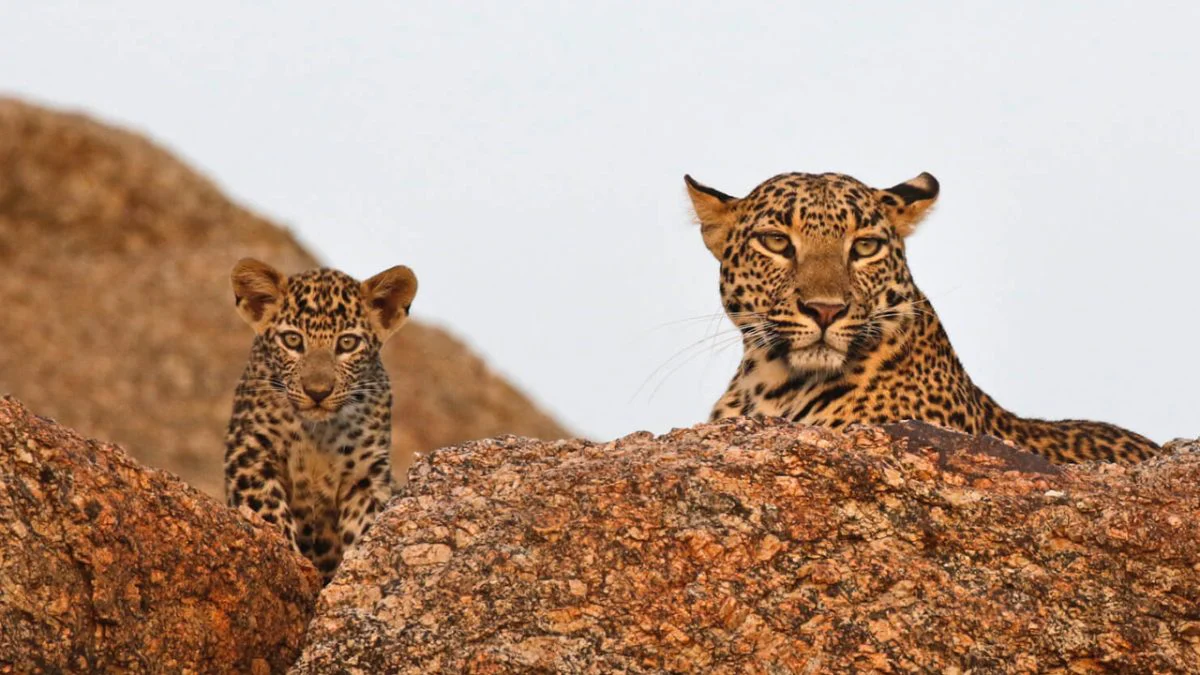
At Jawai, wildlife researchers, professional photographers, and experienced safari guides regularly observe leopard behaviour that simply should not happen according to conventional wildlife science. Multiple leopards sharing the same rocky hillocks without conflict. Siblings from different litters resting within metres of each other. Adult males tolerating the presence of other males in overlapping territories. Leopards so relaxed in the presence of humans and vehicles that they yawn, groom, and play within touching distance of safari jeeps without the slightest sign of stress.
Jawai is not just a great place to see leopards. It is a place where leopards are doing something genuinely new — and wildlife science is only beginning to understand why.
What Makes a Leopard Social? Understanding the Baseline
To appreciate how extraordinary Jawai's leopards are, it helps to understand how leopards normally behave across the rest of their range. In standard leopard habitat a single adult male typically maintains a territory of 30 to 80 square kilometres depending on prey availability. Adult females hold smaller territories of 15 to 40 square kilometres. These territories overlap minimally and are defended through scent marking, vocalisation, and direct confrontation.
Encounters between adult leopards outside mating season typically result in one animal retreating immediately. Prolonged close proximity between two adults of the same sex almost always escalates into aggression. Cubs stay with their mothers for 18 to 24 months then disperse — often travelling enormous distances to establish territories far from their birth area specifically to avoid competition with their mother and siblings.
At Jawai virtually none of this standard behaviour applies consistently. The leopards here have developed a social flexibility that appears unique in the scientific literature — and the reasons why reveal something profound about leopard intelligence and adaptability.
Multiple Leopards on a Single Hillock — The Jawai Normal
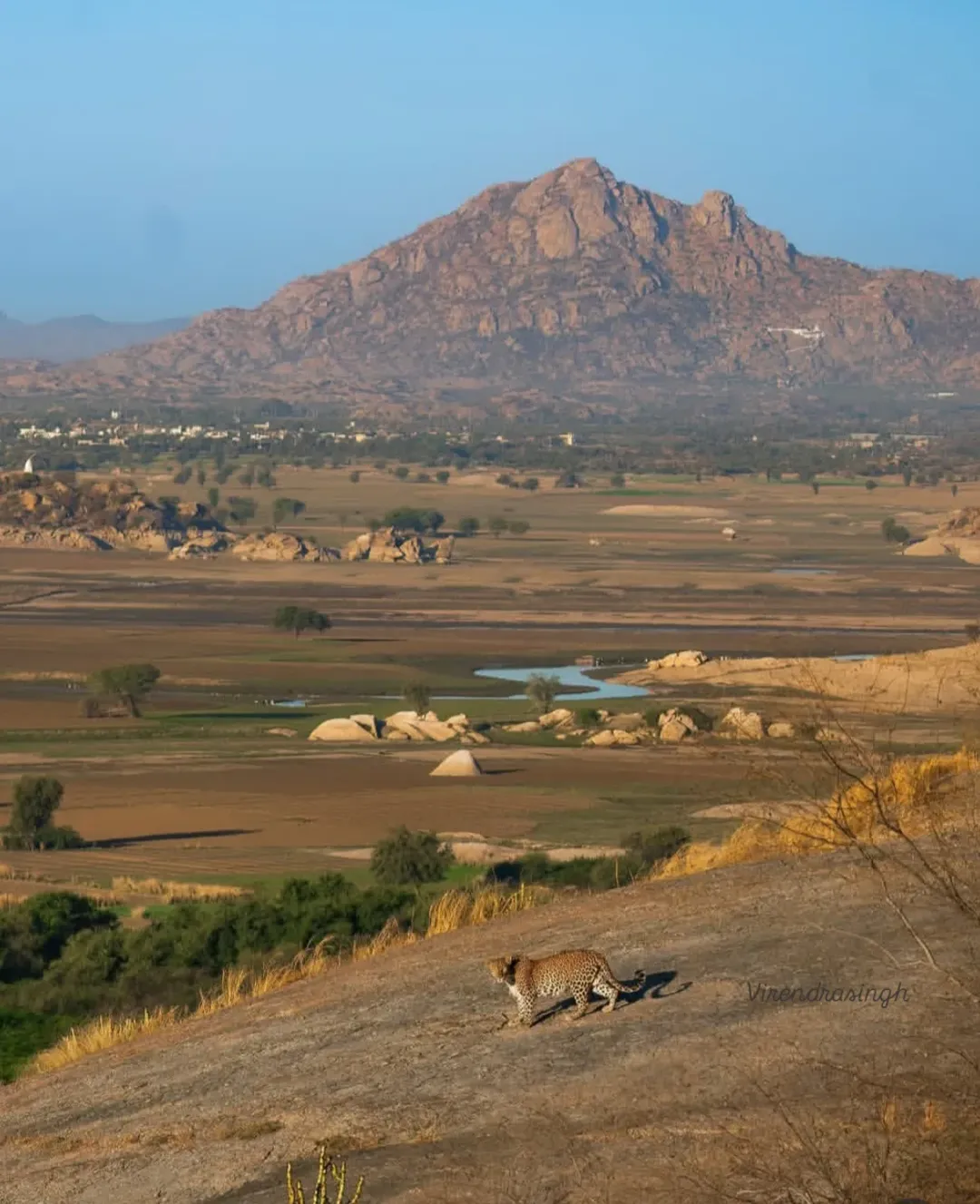
Perhaps the most striking behavioural anomaly at Jawai is the regular observation of multiple leopards occupying the same rocky hillock simultaneously without significant conflict. Safari guides at Jawai report sightings of three, four, and occasionally five individual leopards visible within a single hillock system during morning and evening safaris — something that would be considered extraordinary anywhere else in the leopard's range.
These multi-leopard observations are not random chance gatherings. They follow consistent patterns that our guides have documented over years of daily observation:
- Adult females with grown cubs: Mothers at Jawai tolerate their sub-adult offspring for significantly longer periods than typically observed elsewhere — sometimes maintaining loose family associations for 6 to 12 months beyond the normal separation age
- Sibling associations: Sub-adult siblings from the same litter frequently continue associating after maternal separation — resting near each other, occasionally sharing kills, and maintaining overlapping ranges within the same hillock system
- Male tolerance of overlapping females: Adult territorial males at Jawai show unusually high tolerance for multiple adult females within their range — sometimes observed resting on adjacent rock faces with no visible tension
- Non-related adult tolerance: Most remarkably guides regularly observe unrelated adult leopards — animals with no family connection — sharing hillock space with nothing more than casual mutual awareness
Why Are Jawai Leopards So Different? The Scientific Theories
Wildlife researchers who have studied Jawai propose several interconnected explanations for the extraordinary social behaviour observed here. No single theory fully explains everything — the reality is probably a combination of all these factors working together over many generations.
Theory 1 — High Prey Density Reduces Competition
Standard leopard territorial aggression is fundamentally driven by competition for food. When prey is scarce, a leopard that tolerates another individual nearby risks losing meals it cannot afford to lose. But Jawai supports unusually high prey density for its size — large numbers of nilgai, wild boar, livestock, and smaller prey species provide enough food that multiple leopards can survive in close proximity without meaningful competition for resources.
When the fundamental driver of territorial aggression — food competition — is reduced, leopards appear capable of a social flexibility that their standard behaviour would never reveal. Jawai's prey-rich landscape may have essentially removed the main reason leopards are normally antisocial.
Theory 2 — High Leopard Density Creates Social Learning
With an estimated 50 to 60 leopards in a relatively small area, Jawai leopards encounter other individuals of their species far more frequently than leopards in low-density populations. Researchers propose that this enforced regular contact over multiple generations has created a population where social tolerance has become a learned and inherited behaviour pattern.
Young leopards at Jawai grow up in an environment where seeing other leopards nearby is completely normal. They never develop the extreme avoidance behaviour that leopards in low-density populations exhibit because they have never experienced a landscape where other leopards are rare and threatening. Social tolerance at Jawai may have become the default — passed from mother to cub across enough generations to become effectively hardwired into the local population.
Theory 3 — Human Habituation Reduces Overall Stress
A leopard under chronic stress — constantly alert to human threat, frequently disturbed, regularly forced to flee — has neither the energy nor the psychological space to develop social tolerance. Survival demands consume all available attention and energy.
Jawai leopards experience almost zero stress from human presence. Protected by Rabari religious belief for centuries, never hunted, never trapped, never chased from their denning sites — these animals live in a state of profound psychological security that is genuinely rare for a large predator sharing landscape with high human population density.
Researchers suggest that this chronic low-stress environment may have freed cognitive and behavioural resources that leopards in threatened populations never have available — allowing social experimentation, tolerance, and relationship building that survival-stressed animals simply cannot afford.
Theory 4 — The Rabari Factor and Generational Memory
The most thought-provoking theory proposed by some researchers involves the concept of generational behavioural inheritance shaped specifically by the Rabari relationship. Jawai leopards have lived without persecution from the dominant local human community for so many generations that the ancestral fear response toward humans may have been substantially reduced through a process similar to domestication — not tame, but profoundly less reactive than wild leopards elsewhere.
If fear of humans is reduced, and if that reduction has been passed down through enough generations, then the general threat-assessment system of Jawai leopards may simply be calibrated differently from other populations — perceiving the world as a less dangerous place overall and therefore showing less territorial aggression toward their own species as well as toward humans.
Documented Extraordinary Social Observations at Jawai
Beyond general behavioural patterns, our guides and visiting researchers have documented specific extraordinary social observations at Jawai that stand as some of the most remarkable leopard behaviour ever recorded in India:
The Three Brothers of Bera
Perhaps the most famous social observation in Jawai's recent wildlife history involves three sub-adult male siblings — nicknamed the Three Brothers by local guides — who continued associating for an unprecedented period after maternal separation. For nearly eight months these three young males were regularly observed together on the same hillock system, occasionally feeding from the same kill, and showing no significant aggression toward each other despite all being reproductively maturing males. This duration of voluntary male sibling association is considered highly unusual in leopard behavioural literature and attracted significant attention from wildlife researchers when documented.
Cross-Territory Female Tolerance
Jawai guides have on multiple occasions observed two adult unrelated females resting within 50 metres of each other on the same rocky outcrop — behaviour that in most leopard populations would trigger immediate aggressive display or flight. At Jawai these observations occurred without any visible tension — both animals aware of each other's presence, choosing to remain, and eventually moving off independently without conflict. The casual nature of these encounters suggests a level of social recognition and individual familiarity between Jawai leopards that goes significantly beyond what standard territorial behaviour would predict.
Male-Cub Tolerance
In standard leopard behaviour adult territorial males represent a significant danger to cubs — infanticide by resident males is documented across the species range as a reproductive strategy. At Jawai several instances have been observed where the resident territorial male was found in the vicinity of a female with small cubs without any aggressive behaviour toward the cubs. While guides caution that these observations require careful interpretation, the pattern of reduced male aggression toward cubs within the Jawai population is considered notable by researchers familiar with leopard behaviour elsewhere.
What Jawai's Social Leopards Mean for Conservation Science
The behavioural phenomenon at Jawai has implications that extend far beyond one remarkable wildlife destination in Rajasthan. If leopard social behaviour is genuinely more flexible and environmentally responsive than previously understood — if the right combination of prey availability, low persecution, and generational habituation can produce a socially tolerant leopard population — then the standard assumptions underlying leopard conservation management across Asia and Africa may need significant revision.
Specifically Jawai raises important questions about:
- Minimum viable territory size calculations used to assess leopard habitat requirements
- Population density limits assumed in leopard conservation planning
- The role of community relationship and persecution history in shaping leopard behaviour across generations
- Whether social leopard populations can sustain higher densities than solitary ones and what that means for habitat management
Jawai is not just a tourism destination. It is an outdoor laboratory producing wildlife science that could reshape how we protect leopards across the entire planet.
Seeing the Social Leopards Yourself
Understanding the social phenomenon of Jawai's leopards transforms the safari experience completely. Instead of simply hoping to spot a leopard on a rock, you begin watching the interactions between individuals — noticing which animals share space comfortably, which maintain respectful distances, which young leopards are still associating with siblings, and which territorial males are moving through the landscape with the calm authority of animals that have never known fear.
Ask your guide specifically about individual leopard relationships before your safari. A good Jawai guide will tell you which leopards currently share the hillocks you are visiting, which families are denning nearby, and what social dynamics are currently playing out across the landscape. Armed with this knowledge every sighting becomes a chapter in an ongoing story — not just a beautiful animal on a rock, but a character in one of the most extraordinary wildlife dramas on earth.
Final Thoughts — The Leopard Reimagined
Jawai does not just show you leopards. It shows you what leopards can become when humans choose to live alongside them with respect, faith, and genuine tolerance across enough generations for the animals themselves to change.
The solitary ghost of the hills — the textbook leopard of conventional wildlife science — still exists in most of the world. But at Jawai, protected by the Rabari community's sacred bond and shaped by centuries of peaceful coexistence, the leopard has quietly become something more complex, more social, and more deeply fascinating than the textbooks ever imagined.
Come to Jawai not just to see a leopard. Come to see what a leopard truly is when the world finally leaves it in peace.
Book Your Official Jawai Safari & Stay Package
Don't miss out on peak sighting hours! Reserve your authorized 4x4 gypsy safari and hotel stay with us today.
You Might Also Like