Astrophotography in Jawai: Capturing Leopards and Starry Skies
Where Leopards Meet the Milky Way
Most people visit Jawai for its extraordinary daytime leopard safaris. But as the sun sets behind the Aravalli hills and the last safari jeeps return to camp, something equally magical begins to happen. The sky above Jawai transforms into one of the most spectacular natural displays visible anywhere in India — a vast unpolluted canopy of stars, planets, and the full arc of the Milky Way stretching from horizon to horizon over the same granite rocks where leopards sleep just metres below.
Jawai sits in a remote corner of Pali district far from major city light pollution. On a clear moonless night the darkness here is profound — the kind of darkness that modern urban Indians almost never experience. Combined with the dramatic silhouettes of leopard-inhabited rock formations, ancient Aravalli hills, and the reflective surface of Jawai Bandh reservoir, this creates astrophotography opportunities that are genuinely world class.
Why Jawai is Perfect for Astrophotography
Several factors combine to make Jawai an exceptional astrophotography destination:
- Low light pollution: Jawai is located far from major cities — Jodhpur is 160 km away and there are no large industrial zones nearby. Bortle scale readings in the Jawai area typically fall between 3 and 4 — considered dark to rural sky, excellent for deep sky photography
- Dramatic foreground subjects: The granite rock formations that leopards inhabit create extraordinary natural silhouettes against the night sky — jagged, ancient, and deeply atmospheric
- Reflective reservoir: Jawai Bandh reflects stars and the Milky Way on calm nights creating stunning mirror image compositions
- Dry clear atmosphere: Rajasthan's desert climate means exceptionally clear transparent skies for most of the year — far fewer cloudy nights than other Indian wildlife destinations
- Accessible remote location: Unlike truly remote dark sky sites, Jawai has good road access, comfortable accommodation, and experienced local guides who can take you to the best night photography spots safely
Best Time for Astrophotography at Jawai
Best Months Overall — October to March
Winter months offer the clearest skies, lowest humidity, and longest darkness hours at Jawai. October through March is ideal for astrophotography with consistently transparent nights and comfortable temperatures for extended outdoor shooting sessions. Cold nights from December to February require warm layering but deliver the most spectacular sky clarity of the year.
Milky Way Season — February to May
The galactic core of the Milky Way rises above the horizon and becomes photographable from February through May at Jawai. Peak Milky Way visibility falls in March and April when the galactic core rises high enough in the sky to photograph against the Aravalli rock silhouettes. This creates the most dramatic possible combination — the ancient granite formations of leopard country framed against the glowing spiral arm of our galaxy.
Avoid Monsoon — July to September
Monsoon clouds make astrophotography nearly impossible from July through mid-September. Skip this period entirely for night sky photography purposes.
Moon Phase Planning — Critical
The single most important factor in astrophotography planning is the lunar calendar. A full moon floods the landscape with light and completely overwhelms faint stars and the Milky Way. Always plan your Jawai astrophotography trip around the new moon window — the 5 days before and 5 days after new moon when the sky is darkest. Check the lunar calendar before booking and specifically request new moon period dates from your camp.
Camera Settings for Astrophotography at Jawai
Night sky photography requires very different settings from daytime wildlife photography. Use these as your starting point and adjust based on conditions:
Milky Way and Star Field Photography
- Lens: Wide angle 14mm to 24mm with maximum aperture f/1.8 to f/2.8
- Aperture: Wide open — f/1.8, f/2, or f/2.8 maximum
- Shutter Speed: Use the 500 Rule — divide 500 by your focal length to get maximum seconds before stars trail. Example: 500 ÷ 20mm = 25 seconds maximum
- ISO: Start at ISO 3200 — push to ISO 6400 if your camera handles noise well
- Focus: Manual focus set to infinity — autofocus does not work reliably on stars
- White Balance: Set manually to 3800K–4200K for natural cool blue night sky tones
- File Format: Always shoot RAW — JPEG destroys critical shadow detail needed in post processing
- Drive Mode: Use 2 second self timer or remote shutter release to avoid camera shake
Star Trails Photography
For dramatic star trail images showing circular star paths above Jawai rock formations:
- Shutter Speed: 20–30 minutes single exposure OR multiple 30-second exposures stacked in post processing
- ISO: 800–1600 for long single exposures
- Aperture: f/4 to f/5.6 for sharpness across the frame
- Direction: Face north and include Polaris (North Star) in frame for perfectly circular concentric trails centred on one point
Foreground Leopard Rock Silhouettes
The most powerful Jawai astrophotography compositions combine the night sky with dramatic rock silhouettes. For these shots:
- Expose primarily for the sky — rocks will naturally become dark silhouettes
- Consider a two-exposure blend — one exposure for sky, one for foreground rocks lit by torch or moonlight — merged in post processing
- Position yourself so a distinctive rock formation or leopard-inhabited hillock breaks the skyline dramatically
- Include Jawai Bandh reservoir in the foreground when possible for star reflection compositions
Best Night Photography Locations at Jawai
Aravalli Rock Formations
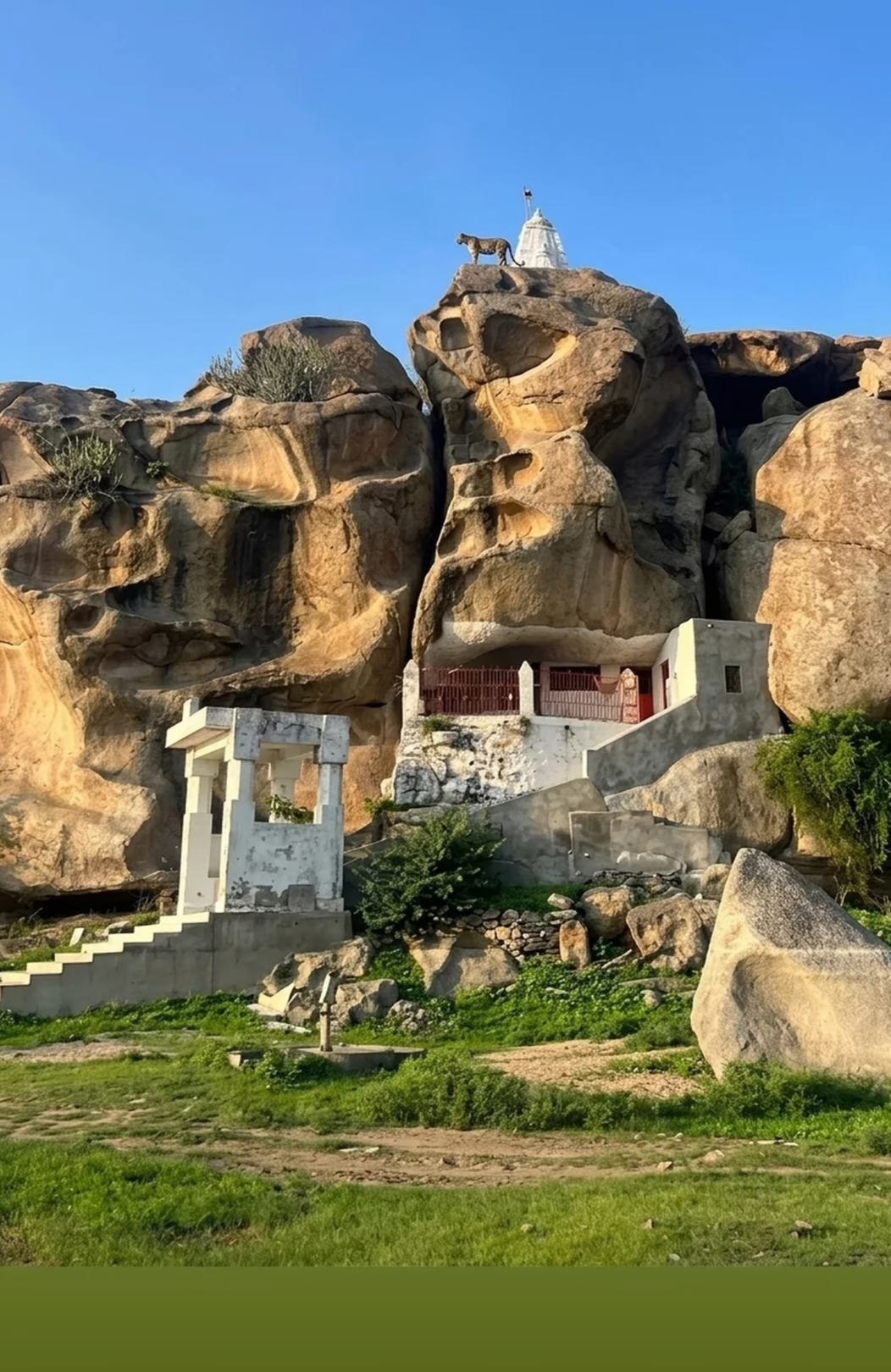
The granite hillocks surrounding Bera village are the signature Jawai astrophotography locations. Jagged rock silhouettes against the Milky Way create images that are immediately recognisable and deeply atmospheric. Your local guide can position you safely near known leopard denning rocks for the most dramatic compositions — the knowledge that a wild leopard may be sleeping just metres from your tripod adds an extraordinary dimension to the night photography experience.
Jawai Bandh Reservoir Banks
On calm windless nights the reservoir surface becomes a perfect mirror. Stars and the Milky Way reflected in the still water alongside silhouettes of roosting birds create ethereal compositions unlike anything available at Indian national parks. Arrive 30 minutes before astronomical twilight ends to set up composition before full darkness falls.
Village Outskirts at Blue Hour
The period 20 to 40 minutes after sunset — called blue hour — offers a magical window when the deep blue sky still holds detail, the first bright stars appear, and warm yellow lamplight glows from Rabari village windows. This transitional light creates moody documentary-style images that tell the full story of Jawai's human and natural world in a single frame.
Essential Equipment for Jawai Night Photography
- Fast wide angle lens: 14mm f/1.8 or 24mm f/1.4 — the single most important equipment investment for astrophotography
- Sturdy tripod: Essential — no handheld night photography is possible at these shutter speeds
- Remote shutter release: Eliminates camera shake completely during long exposures
- Red headlamp: Preserves your night vision while allowing you to adjust equipment — never use white light during a shoot session
- Extra batteries: Cold Rajasthan winter nights drain batteries extremely fast — carry minimum three fully charged spares
- Warm layers: December to February nights at Jawai drop to 5°C–10°C — dress significantly warmer than you expect to need
- Star tracking app: PhotoPills or Stellarium to plan exact Milky Way position, rise times, and moon phases before your trip
- Dew heater or lens warmer: Prevents front lens element fogging on cold humid nights near the reservoir
Planning Your Astrophotography Safari at Jawai
Most standard Jawai safari camps do not automatically include night photography sessions. Here is how to arrange the best possible astrophotography experience:
- Book during new moon window — confirm exact new moon dates with your camp before finalising travel dates
- Request a dedicated night photography guide — ask your camp specifically for a local guide willing to accompany you to rock formations after dark
- Plan for at least two nights of shooting — weather and cloud cover are unpredictable even in Rajasthan. A backup night is essential
- Check the weather forecast — use Windy or Meteoblue for cloud cover forecasts 3 to 5 days ahead
- Scout locations in daylight — use your morning or evening safari to identify and remember the exact compositions you want to return to after dark
- Inform your camp about night sessions — so they can arrange late dinner timing and ensure your guide is available after standard safari hours
Post Processing Astrophotography Images from Jawai
RAW files from night photography require careful post processing to reveal their full potential. Key adjustments in Lightroom or Capture One:
- Reduce noise first — apply luminance noise reduction before any other adjustment at high ISO files
- Lift shadows carefully — bring out foreground rock detail without introducing excessive noise
- Boost clarity and texture on the Milky Way core to bring out dust lane detail
- Enhance star colours — reduce saturation slightly overall then specifically boost blues and purples in the sky
- Use radial filter to gently brighten the galactic core area drawing the viewer's eye to the centre of the image
- Calibrate white balance — cool the sky slightly toward blue while keeping foreground rocks warmer for natural separation
The Experience Beyond the Photograph
Experienced astrophotographers who visit Jawai consistently report that the experience transcends photography entirely. Standing in complete darkness on ancient Aravalli granite, Milky Way blazing overhead, the distant sound of Rabari cattle bells drifting across the night air, knowing that a wild leopard is sleeping on the rocks just above you — this is one of those rare travel moments that no photograph can fully capture.
Jawai at night is not just a photography location. It is one of the most profound wildlife and nature experiences available anywhere in India. Come with your camera, stay for the stars, and leave with something far more valuable than images — a memory that will stay with you for the rest of your life.
Book Your Official Jawai Safari & Stay Package
Don't miss out on peak sighting hours! Reserve your authorized 4x4 gypsy safari and hotel stay with us today.
You Might Also Like